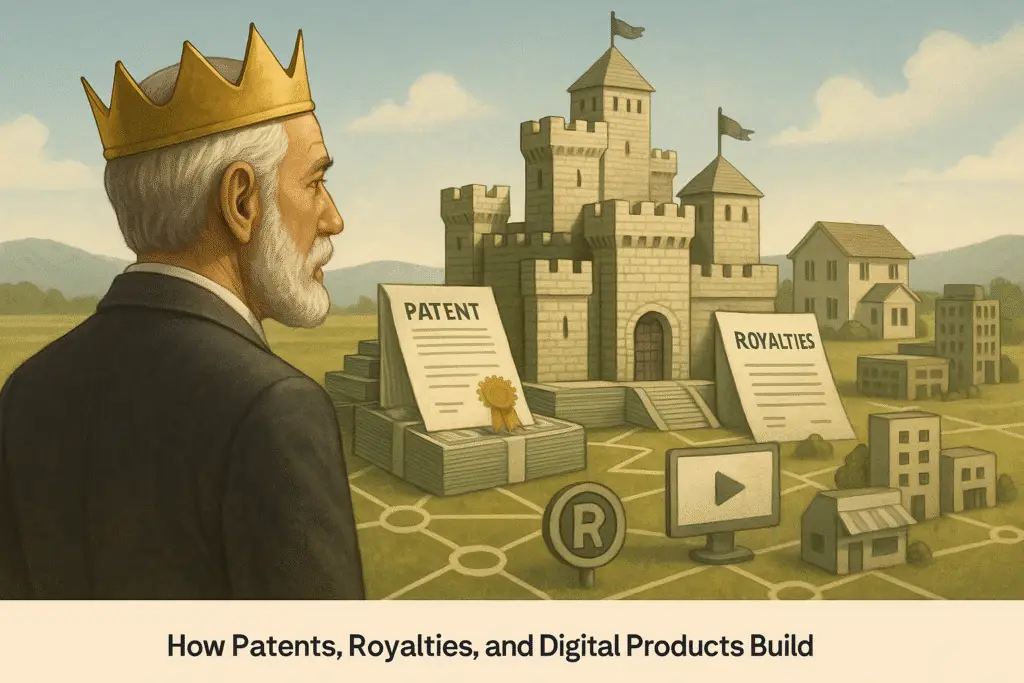
Unlocking the Secrets of Lasting Wealth: A Machiavellian Perspective
If you stopped working tomorrow, how long would your money protect you? For many, the answer is merely weeks or months, yet for the truly wealthy, it’s measured in eternity. Wealth that endures is built not on constant toil, but through systems and ownership that yield returns even when you are not actively laboring. The rich think not only in terms of labor but in terms of permanence, creating assets that can reward them for decades.
The Power of Patents: Protecting Your Innovations
Consider the concept of patents as a stronghold of wealth. During the Renaissance, Venice thrived by granting inventors exclusive rights to profit from their inventions, ensuring that talented minds remained loyal. A modern example is James Dyson, who spent years perfecting a vacuum cleaner that doesn’t lose suction. His real achievement came not from the product alone, but from the hundreds of patents protecting it from competition; every rival wishing to replicate his success had to pay a fee.
This principle extends beyond physical inventions to cultural products as well. Mariah Carey’s hit song “All I Want for Christmas Is You,” recorded in 1994, continues to generate millions in royalties annually. This illustrates the mastery of creating something once and allowing others to perpetually use it, thus providing ongoing financial benefits.
In our modern world, creating digital products such as ebooks, courses, or templates allows for infinite sales without costs of reproduction. Russell Brunson exemplifies this when he created a downloadable book that continues to generate income a decade later—a testament to the power of leveraging digital assets. The internet has democratized this opportunity, allowing individuals to monetize ideas far beyond what was possible in earlier times.
Royalties: The Gift that Keeps on Giving
Exploring the lucrative world of royalties reveals how artistic creations can transform into powerful financial assets. A prime example of this is Mariah Carey’s iconic song, “All I Want for Christmas Is You.” Released in 1994, the song continues to generate millions for Carey each holiday season through royalties. This system illustrates the principle that it is possible to create something once and reap benefits for decades, a concept that aligns closely with the teachings of Machiavelli on the nature of wealth and power.
Understanding how royalties work reveals them as a form of passive income, where artists receive payments each time their work is used or performed. The enduring popularity of Carey’s holiday classic demonstrates how cultural creations embed themselves into societal rituals, ensuring that the creator benefits repeatedly from their work.
For those who might not be musicians or writers, the modern digital landscape has opened up vast opportunities to monetize creative outputs without the limitations of traditional publishing or physical sales. Digital products such as ebooks, online courses, templates, and toolkits can be created once and sold infinitely, leading to unlimited potential for passive income.
Digital Products: Infinite Earnings with Minimal Effort
In today’s fast-paced digital world, the potential to create products that generate enduring income has never been more accessible. The foundation of lasting wealth is not constant labor, but creating systems that continue to reward you even in your absence. Consider the world-renowned entrepreneur James Dyson, who, after painstakingly perfecting his vacuum cleaner through 5,000 prototypes, amassed incredible wealth through the hundreds of patents he secured for his designs.
Digital products, like those created by Russell Brunson, present a unique advantage—once created, they can be sold repeatedly without incurring additional reproduction costs, allowing creators to market their ideas directly to consumers on a substantially larger scale.
Licensing and Trademarks: Turning Words into Wealth
Licensing and trademarking are powerful avenues for building wealth, as demonstrated by notable figures like Michael Buffer. Buffer’s famous phrase “Let’s get ready to rumble” is a prime example, transforming just five words into over $400 million in revenue. Once secured, a trademark allows the owner to dictate terms of use, compelling others to pay for the privilege of utilizing their brand.
Additionally, George Lucas’s creation of the Star Wars universe exemplifies how owning and licensing intellectual property can lead to substantial wealth generation. While the films grossed billions, the real profits came from licensing merchandise, toys, and games, producing perpetual income without Lucas directly manufacturing these products.
Franchising and Real Estate: Building Empires Beyond Your Reach
Franchising and real estate investment present powerful avenues for generating wealth and establishing layers of income. Ray Kroc’s transformation of McDonald’s into a franchise empire exemplifies how creating repeatable systems can lead to passive income streams. Moreover, Kroc recognized the significance of land ownership, ensuring that while employees toiled in the kitchens, he collected rent from franchises while they operated independently.
Real estate remains vital in wealth generation, allowing savvy investors to generate income through rental properties while ensuring tribute from anyone who occupies the land. This strategy mirrors historical examples, emphasizing the importance of ownership over mere labor.
Investing for Income: The Silent Power of Dividends
Dividend stocks and the art of patient investing present a timeless approach to wealth building. For instance, Warren Buffett’s long-standing investment in Coca-Cola demonstrates how patient ownership can yield significant financial rewards without needing to sell shares. Dividends serve as consistent tributes from investments, reinforcing the value of ownership over labor.
Creating a portfolio centered around dividend-paying stocks can result in a steady income stream that grows over time, reflecting the power of compound interest.
The Bold Moves of Private Equity: Seizing Opportunities
Private equity investment is a powerful tool that savvy investors like Peter Thiel and Naval Ravikant have used to capitalize on emerging opportunities. Their investments in companies like Facebook and Twitter showcase how initial capital can be transformed into extraordinary returns through foresight and strategic risk-taking.
Understanding the risk-reward dynamic is essential, as not every venture will yield success. Investors are encouraged to broaden their perspectives and to build alliances that unlock investment opportunities and provide insights that may not be readily available.
The Importance of Networks: Monetizing Your Connections
The often-overlooked strength of networking offers significant financial potential, driven by the cultivation of relationships that yield mutual benefits and wealth generation. By linking consultants, investors, or creators, you can position yourself as a vital connector within your industry. This “gatekeeping” approach enables you to draw value and income from your networks without necessarily being the primary producer.
In today’s digital age, wealth capitalizes on opportunities, and those who hold the keys to connections will see the flow of wealth directed toward them. Successful individuals emphasize retaining control over any creation and building systems that endure beyond personal involvement.
Conclusion: Build Your Wealth Fortress
In synthesizing these synergistic strategies, it’s clear that the transition from reliance on labor to establishing ownership-based financial structures is crucial. The true key to wealth isn’t merely hard work, but creating proprietary systems that yield ongoing benefits. As you consider your own potential for wealth, remember the importance of creating systems that function independently of your personal involvement. Begin your journey today and start constructing the future you desire, becoming a master of wealth rather than a mere servant to labor.
“`